Addressing the Agniveer Recruitment Controversy
Addressing the Agniveer Recruitment Controversy

Agenda : Addressing the Agniveer Recruitment Controversy
The Agniveer recruitment scheme, introduced as a transformative reform to the Indian armed forces, has ignited a firestorm of debate and controversy across the country.
This committee will simulate the Lok Sabha, the lower house of the Indian Parliament, to dissect the multifaceted implications of this policy. Delegates will represent diverse political parties, reflecting the wide range of opinions and interests surrounding the Agniveer scheme.
The committee will delve into the core tenets of the scheme, analyzing its potential impact on national security, military readiness, and the socio-economic landscape of the country. Proponents argue that the Agniveer scheme will modernize the armed forces by infusing them with a younger, technologically adept cadre, while also addressing the growing pension burden.
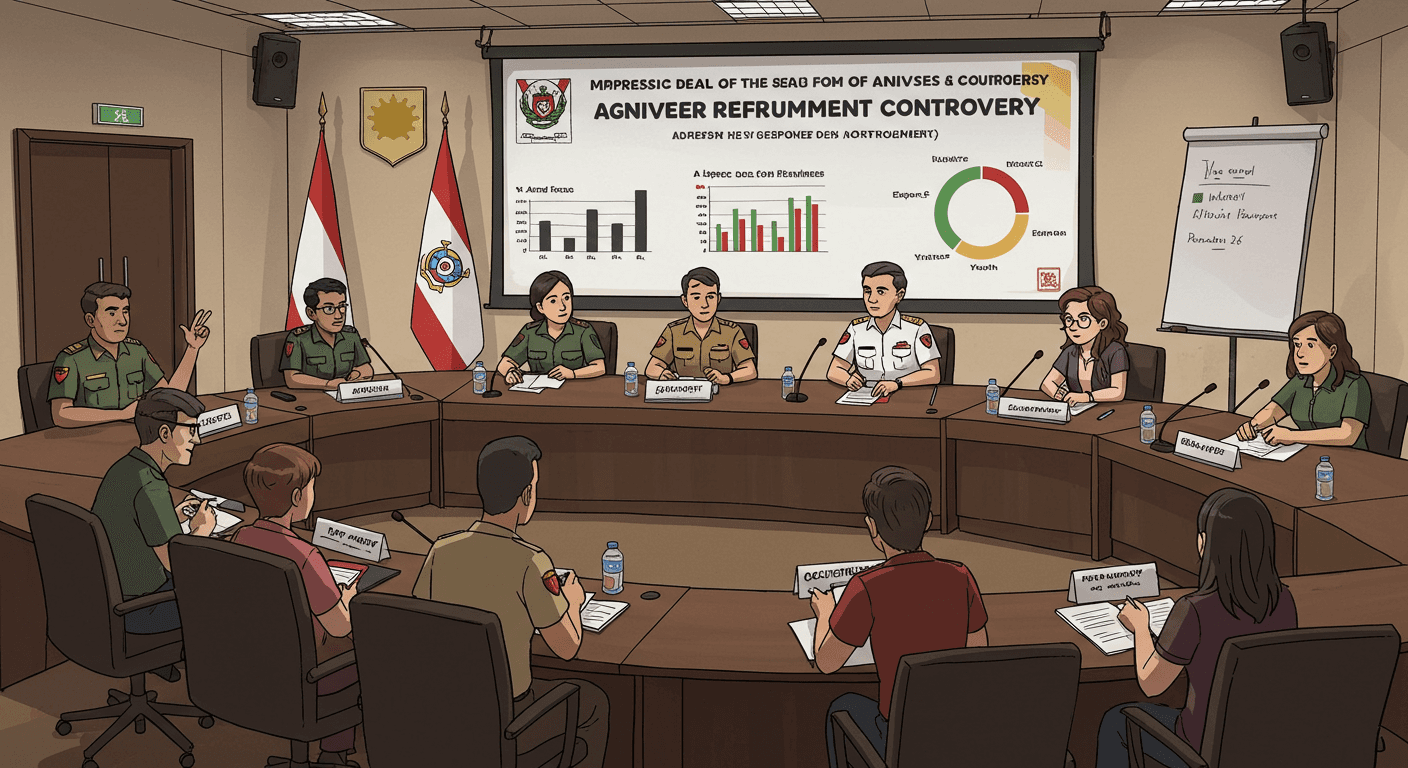
Critics, however, express concerns about the shorter service duration, the potential impact on regimental cohesion, and the future prospects of Agniveers after their four-year tenure. The committee will examine the potential benefits of the scheme, such as reduced manpower costs, enhanced operational efficiency, and the creation of a skilled workforce for the civilian sector.

Delegates will also address the potential drawbacks, including the perceived dilution of military experience, the potential for social unrest due to limited job security, and the challenges in reintegrating Agniveers into civilian life. The committee will engage in robust debate, exploring potential amendments and alternative approaches to military recruitment.
Delegates will be challenged to formulate recommendations that address the concerns of various stakeholders, while upholding the paramount importance of national security.
Agenda : Addressing the Agniveer Recruitment Controversy
The Agniveer recruitment scheme, introduced as a transformative reform to the Indian armed forces, has ignited a firestorm of debate and controversy across the country.
This committee will simulate the Lok Sabha, the lower house of the Indian Parliament, to dissect the multifaceted implications of this policy. Delegates will represent diverse political parties, reflecting the wide range of opinions and interests surrounding the Agniveer scheme.
The committee will delve into the core tenets of the scheme, analyzing its potential impact on national security, military readiness, and the socio-economic landscape of the country. Proponents argue that the Agniveer scheme will modernize the armed forces by infusing them with a younger, technologically adept cadre, while also addressing the growing pension burden.
Critics, however, express concerns about the shorter service duration, the potential impact on regimental cohesion, and the future prospects of Agniveers after their four-year tenure. The committee will examine the potential benefits of the scheme, such as reduced manpower costs, enhanced operational efficiency, and the creation of a skilled workforce for the civilian sector.
Delegates will also address the potential drawbacks, including the perceived dilution of military experience, the potential for social unrest due to limited job security, and the challenges in reintegrating Agniveers into civilian life. The committee will engage in robust debate, exploring potential amendments and alternative approaches to military recruitment.
Delegates will be challenged to formulate recommendations that address the concerns of various stakeholders, while upholding the paramount importance of national security.
Agenda : Addressing the Agniveer Recruitment Controversy
The Agniveer recruitment scheme, introduced as a transformative reform to the Indian armed forces, has ignited a firestorm of debate and controversy across the country.
This committee will simulate the Lok Sabha, the lower house of the Indian Parliament, to dissect the multifaceted implications of this policy. Delegates will represent diverse political parties, reflecting the wide range of opinions and interests surrounding the Agniveer scheme.
The committee will delve into the core tenets of the scheme, analyzing its potential impact on national security, military readiness, and the socio-economic landscape of the country. Proponents argue that the Agniveer scheme will modernize the armed forces by infusing them with a younger, technologically adept cadre, while also addressing the growing pension burden.
Critics, however, express concerns about the shorter service duration, the potential impact on regimental cohesion, and the future prospects of Agniveers after their four-year tenure. The committee will examine the potential benefits of the scheme, such as reduced manpower costs, enhanced operational efficiency, and the creation of a skilled workforce for the civilian sector.